
Storyboards
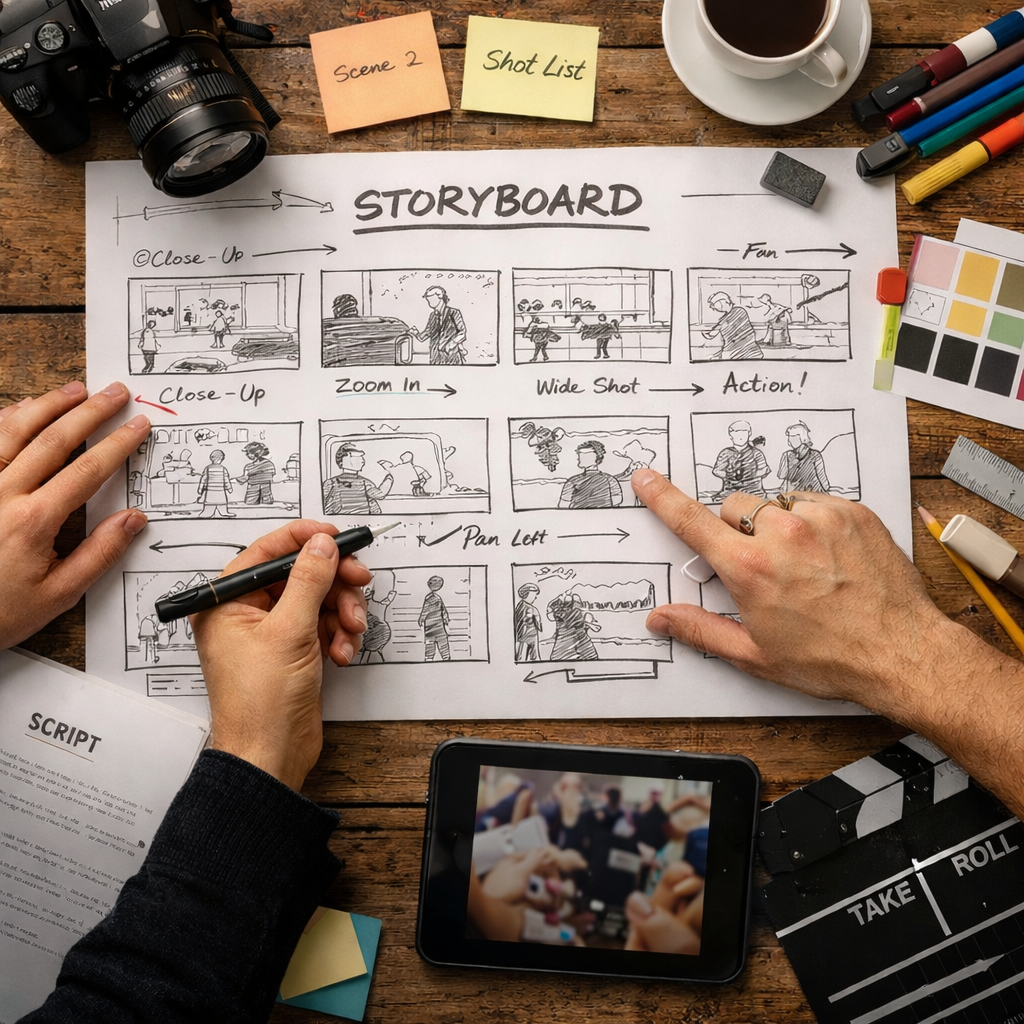
 At AR Media, we knowthat exceptional video content starts long before the camera rolls. It begins with a spark... a concept you had in a daydream, a brainstorm perhaps, or a conversation. We help your ideas flourish into a visual roadmap that guides every decision in production, that roadmap? The storyboard!
Storyboarding is the blueprint that transforms words on a page into images, which helps ensure that everyone - from crew to editors, understand exactly what the final piece should look like.
From concept to visual blueprint
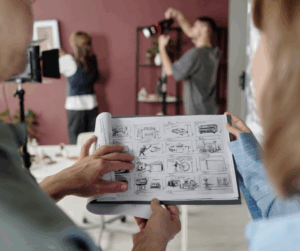
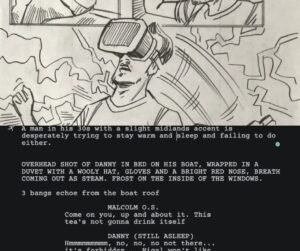
Every project starts with understanding what you want to say and how you want to say it. We take your script or ideas and begin mapping out the key scenes in visual blocks and each frame becomes a snapshot of a moment in your story. The great part is, we can even detail actions, camera angle, timing and emotion!
 Sketching your story
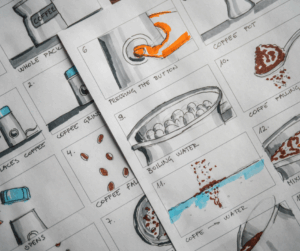
Storyboards can be simple or detailed - from rough pencil sketches to polished digital frames. What matters most is clarity. These frames visually define the beats, or segments of your story and help predict how the final media clip will unfold. This step bridges imagination and production, making sure your vision is understood before we film/ create each scene.
Adding notes, timing and direction
For each frame we can add notes on motion, dialogue, timing and camera cues. This ensures the entire production team, from lighting to location crew, know exactly what’s needed prior to production. This clarity reduces guesswork, streamlines filming and spots potential issues early. This troubleshooting is nothing to worry about, it’s part of the collaborative process that ensures a seamless end result.
 Review and refine
As mentioned above, a storyboard is a collaborative tool. Once the first draft is ready, we share it with you for feedback. Together, we tighten sequences, tweak pacing and polish the narrative for maximum impact. The more aligned we are at the start, the smoother production becomes.
Why Storyboarding matters
A solid storyboard saves time and gives your project direction. It’s not just planning - it’s visualising your success. We piece together our storyboards with love and attention, making sure that your message lands exactly the way you imagined and that every key moment hits its mark.
For more on our storyboard process, why not make a quick stop to our+ Services page

Recapping 2025
With 2025 coming to an end, we caught up with our team to recap on this year and to chat a little about 2026.
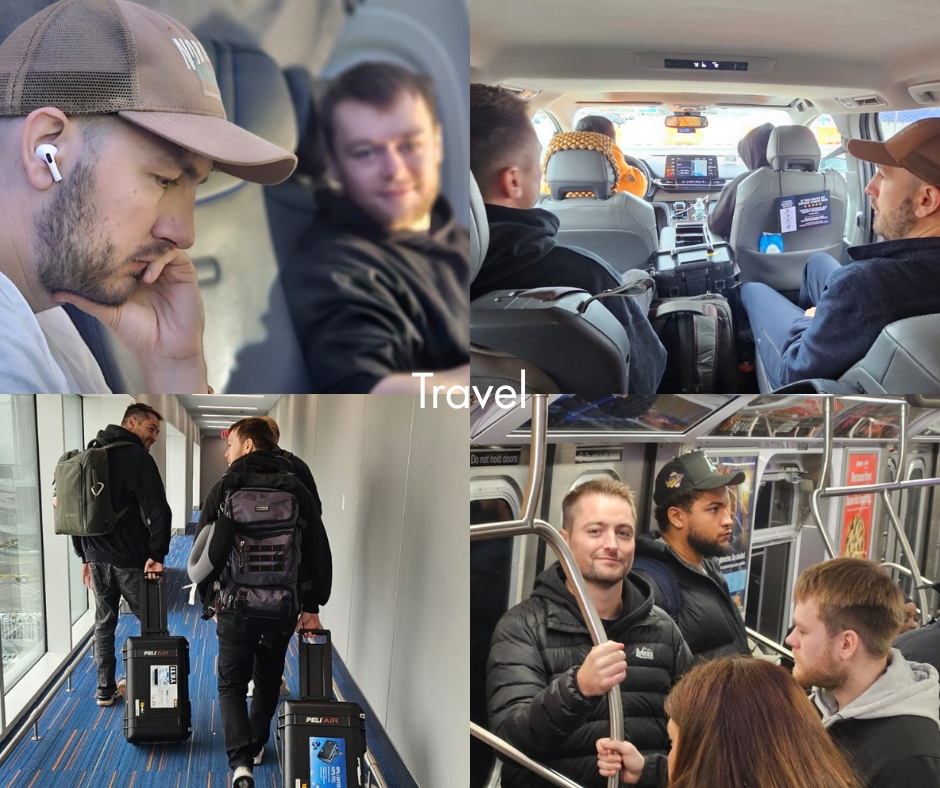
How many countries have the team been to this year?
Rob: Let me think! We've been to the USA twice, France, The Netherlands, Germany, Sweden, Spain, Saudi Arabia, Brazil, UAE and Ireland - off the top of my head!
Work aside - what hobbies have you endulged in this year?
Rob: Lennah and I have recently taken up archery, knife and axe throwing - life skills! I'm currently on the verge of taking up Pilates - and refreshing my French speaking.
Tyler: Photography - and gardening when the weather's nice!
Does anyone have any exciting news for 2026?
Wayne: I have an album coming out in May, available on all platforms!
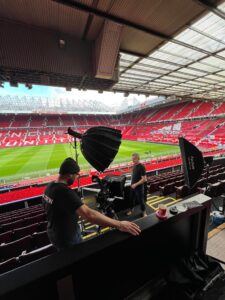
Rob: The boys are off to Dallas, Texas - yeehaw! We're also planning some tourism time outside of work so keep an eye out for the experiences we capture.
Holly: I'm looking forward to prepping and planning for a film project in 2026.
Can you name what you’d consider the top 3 places the crew have visited this year?
What has been your go to equipment pieces this year?
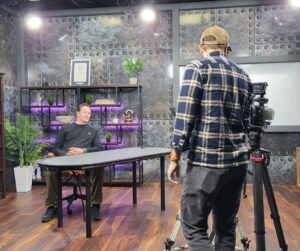
Rob: I love the Sony FX6 Cinema line camera - it's great for what we do, plus it's super robust and modular.
With that in mind Rob, what piece of equipment or gadget was your guilty pleasure?
Rob: I do have to say that I have a guilty secret in that I have a soft spot for the DJI Osmo 3 Pocket camera! So much tech in one tiny device - camera, gimbal and mic all thrown into one! It's a device you can whip out and be shooting on in seconds.
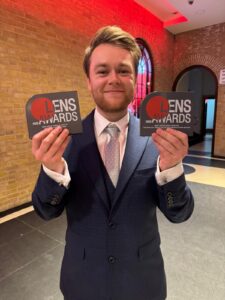
Can you think of a special moment for AR Media this year?
Rob: Bagging two awards at the start of the year! (LENS Awards).
Wayne: I really enjoyed heading the project we collaborated on with Northampton Museum and Art Gallery in September. This was for the Women's Rugby World Cup, bringing tourism to Northampton and shining light on womens sport.
Can you give us any spoilers with regards to hushed projects in 2026?
Holly: We're currently researching technologies for a mystery client. This includes the use of lifesize holograms at events. That's all can say for now!
With the increasing use of AI in the creative industry, what do you make of these new technologies?
Rob: It’s pretty impressive what it can do. I think it’s a really useful tool for creative exploration and generating ideas quickly. Definitely worth playing around with and becoming part of the daily toolset.
Name 3 famous faces that you’ve filmed this year.
How many videos, roughly, do you think you’ve shot this year?
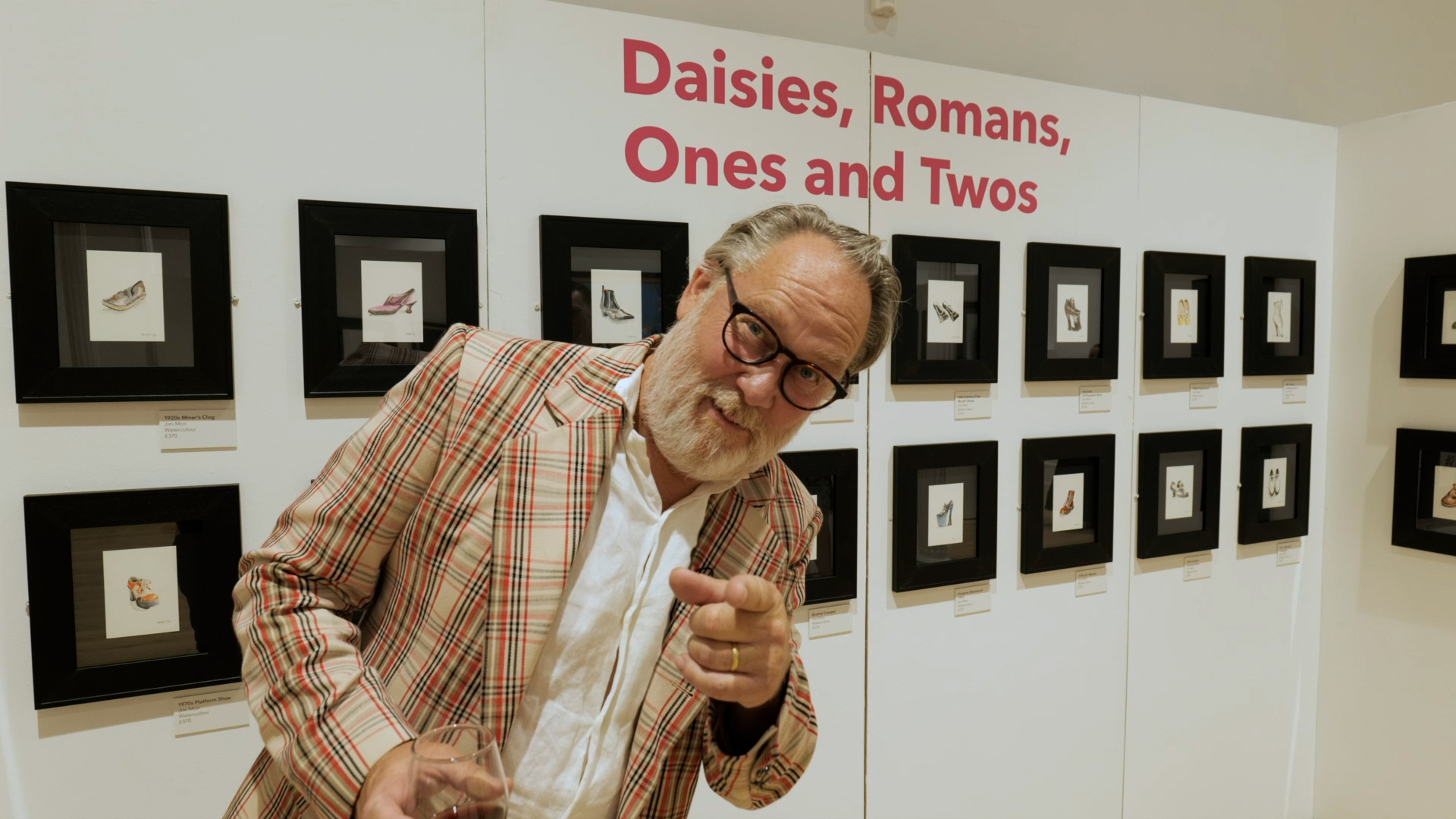
From Vision to Reality: Rob on the Roots of AR Media
‘Yes Sir, I can go to Texas and tour the states for 4 weeks filming’
We sat down with Director of AR Media, Rob Fairhurst, for a broader conversation on the history of our company. Find out more below.
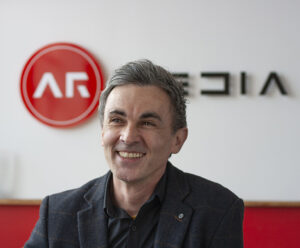
Rob, can you tell us a little more about what inspired you to start a media production company?
Rob: I have loved filming things since I was a teenager - my friends and I would choreograph and film martial arts scenes and I still have the lumps to prove it! We would also go off and film comedy shows and concerts. I just loved getting to see the world through a lens and realised it afforded some very unique opportunities. I wanted to be a camera operator first and foremost; seeking projects that I felt passionate about. To do this, it meant creating a business around that.
Was there a specific moment when you knew this was the right path?
Rob: I assisted a group of filmmakers in making a horror feature film back in 2000. It was amazing because they were creatively up for anything... we had an absolute blast and I learnt so much in the space of that one film, making friends for life. We have a hundred stories to tell, plus, I even fell in love with one of them. You ask how I knew this was the right path, how could it be wrong?!
What gap in the industry were you hoping to fill when you launched the company?
Rob: To be honest I had no idea, I was caught somewhere in the middle between shooting music videos and wanting to really make longer length stories for audiences. We headed to Cannes and made short films of all sorts trying to figure it out.
What was the original vision for the company, and how has it evolved over time?
Rob: The original idea behind AR Media was to create visually interesting music-narrative videos, with the goal of eventually moving into some form of filmmaking. But, as we started producing more content for industrial companies we found ourselves filming in the most incredible locations - places you’d never normally get access to.
We shot everywhere from inside nuclear submarines and underground silver mines to solar plants in the Spanish desert and even on the deck of a newly built aircraft carrier. It was surreal. We were given opportunities to experience things most people never would.
I brought the energy and naivety of a young music video director into the world of corporate and industrial shoots - and honestly, I loved every minute of it.
As the company evolved, we embraced new technologies and produced high-quality content across AR, VR, mixed reality, and 360 video. But at heart, I’ve always been a filmmaker.
Now, we’re entering a completely new chapter - with AI changing everything. It feels like we’re on the edge of something truly transformative.
What were some of the biggest challenges you faced in the early days?
It was the boring stuff, really... contracts, budgeting, learning about tax returns, VAT, corporation tax, carnets… all those dull but absolutely necessary things that come with running a business.
Can you share a pivotal moment in the company’s journey that really shaped its direction?
Rob: Working with Jeff Wayne was a real highlight. My brothers and I used to listen to The War of the Worlds before bed when we were about 9 or 10. It absolutely terrified us, but we loved it!
Now, to have the chance to work on the animation for Jeff Wayne’s Musical Version of The War of the Worlds feels like a full-circle moment. It connects my childhood to my future.
Being trusted to design sequences for his arena tour - and later, to create scenes featuring Liam Neeson and other guest artists over the next 12 years was incredible.
But what stood out most was Jeff himself. He was a huge inspiration. His work ethic, his openness to collaboration, and the way he approached every project with the enthusiasm of a child – it's infectious! It was, and still is, a great experience. Nothing but respect.
How did you secure your first big client or project?
Rob: I said: 'Yes Sir I can go to Texas and tour the states for 4 weeks filming'... which led to 12 years of non-stop projects.
How would you describe the company culture and what do you think makes it unique?
Rob: We’re relaxed, non-competitive and non-micromanaging, I just don't think it helps.
If you could go back and give yourself one piece of advice at the start, what would it be?
Rob: I'm not sure how to answer this one, because I like the uncertainty of it all! I don't want to know the answers and find that it’s a bit more thrilling not knowing what's coming.
Maybe the fear is what drives us.
AR Media's A to Z of video production terminology
Goobledegook… It's all very well using industry terminology between ourselves but we realise that sometimes we may use terms that our clients may not understand. So here's our A to Z of things you might hear us say when you commission us for a video project.
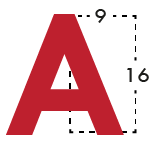 |
Aspect Ratio: The proportional relationship between the width and height of a video frame. Modern videos tend to use 16:9, pre-2000s you might have used 4:3. (also included in the A to Z as its what the AR of AR Media stands for |
 |
B-roll: Additional footage used to support the main content of a video. It is often used to provide visual context or cover transitions. We often capture manufacturing processes, buildings, people at work for this. Bokeh: A favourite of cinematographers, bokeh is the blur effect seen predominantly on lights that are out-of-focus. |
 |
Colour Grading: The process of adjusting and enhancing the colours of a video during post-production to achieve a desired look or mood. The footage we capture in its raw format has a very flat/grey look, but this allows us to tweak the colours to make them as realistic as possible. |
 |
Depth of Field: The range of distance in a shot that appears in focus. A shallow depth of field has a narrow focal range, while a deep depth of field has a wider focal range. Filming an interview for example you would use a shallow depth of field to keep the subject in focus but the background intentionally blurry. |
 |
Exposure: The amount of light that reaches the camera's image sensor, determining the brightness or darkness of a video. A correctly exposed shot will display depths of black without blowing out any highlights such as clouds in the sky. |
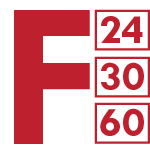 |
Frame Rate: The number of individual frames captured or displayed per second. Common frame rates include 24, 30, and 60 frames per second (fps). This has an effect on quality and also file size. |
 |
Grip: A member of the production crew responsible for setting up and maintaining equipment such as lighting fixtures, tripods, and camera rigs. We're a tight-knit team so every one of us gets involved in setup and breakdown. Gimbal: A device that holds the camera and allows us to turn in any direction freely and smoothly. |
 |
High Definition (HD): A video format with a higher resolution than standard definition, typically 720p or 1080p. But of course these days we record even higher in 4K. |
 |
ISO: The sensitivity of a camera's image sensor to light. A higher ISO allows for better low-light performance but may introduce more noise into the image. A low ISO makes for a finer picture but needs little movement in the frame. |
 |
Jump Cut: A jarring transition between two shots that are nearly identical, often used for stylistic effect or to compress time. J-cut: When the image of a scene is preceded by its sound or audio content. |
 |
Key Light: The primary light source used to illuminate the subject in a video. We'll often have a 3 light setup to balance the subject. |
 |
Lens: A must-have of every A to Z, the optical device that focuses light onto the camera's image sensor. Different lenses have various focal lengths and characteristics, affecting the perspective and field of view. Lavalier: A microphone that clips to the presenter's clothing |
 |
Montage: A sequence of rapidly edited shots, often used to condense time, convey a series of events, or evoke emotions. |
 |
Non-linear Editing: The process of assembling and manipulating video clips out of chronological order using computer-based editing software. |
 |
Overexposure: When a video is too bright due to excessive light, causing details in the highlights to be lost. |
 |
Pan: The horizontal movement of the camera while it remains in a fixed position. We often use rails to slide the camera smoothly for this. Prime lens: a lens that uses a fixed focal length. These tend to be very high quality, very expensive and offer wide apertures. |
 |
QuickTime: A multimedia container file format developed by Apple, commonly used for video editing and playback. |
 |
Rack Focus: The technique of changing the focus from one subject to another within the same shot to shift the viewer's attention. |
 |
Storyboard: A visual representation of a video's planned shots or scenes, typically consisting of illustrations or images with accompanying descriptions. We can help you create these. Shotgun mic: Often used for broadcasting, TV and film production, sports and other applications where it is impractical or undesirable for the subject to wear or hold a microphone. |
 |
Tracking Shot: A shot in which the camera moves alongside or follows a subject, often achieved using a dolly or a stabilized gimbal. |
 |
Underexposure: When a video is too dark due to insufficient light, causing details in the shadows to be lost. |
 |
Voiceover: A recorded narration or commentary added to a video during post-production, typically synchronized with on-screen visuals. We have a full recording studio in our building for this. |
 |
White Balance: The adjustment of a camera's settings to ensure accurate color reproduction under different lighting conditions. |
 |
XLR: A type of professional audio connector commonly used for balanced audio signals in video production. |
 |
YouTube: We couldn't have an A to Z without mentioning a certain popular online video-sharing platform where users can upload, view, and share videos. Alternatives include Vimeo and Wistia. |
 |
Zoom: The change in focal length of a camera lens to make the subject appear closer or further away without physically moving the camera. Zoom shot: The illusion of moving closer or away from a subject, making them appear bigger or smaller. |
So there you have a brief A to Z of video terminology, enjoy and we hope you find it useful.
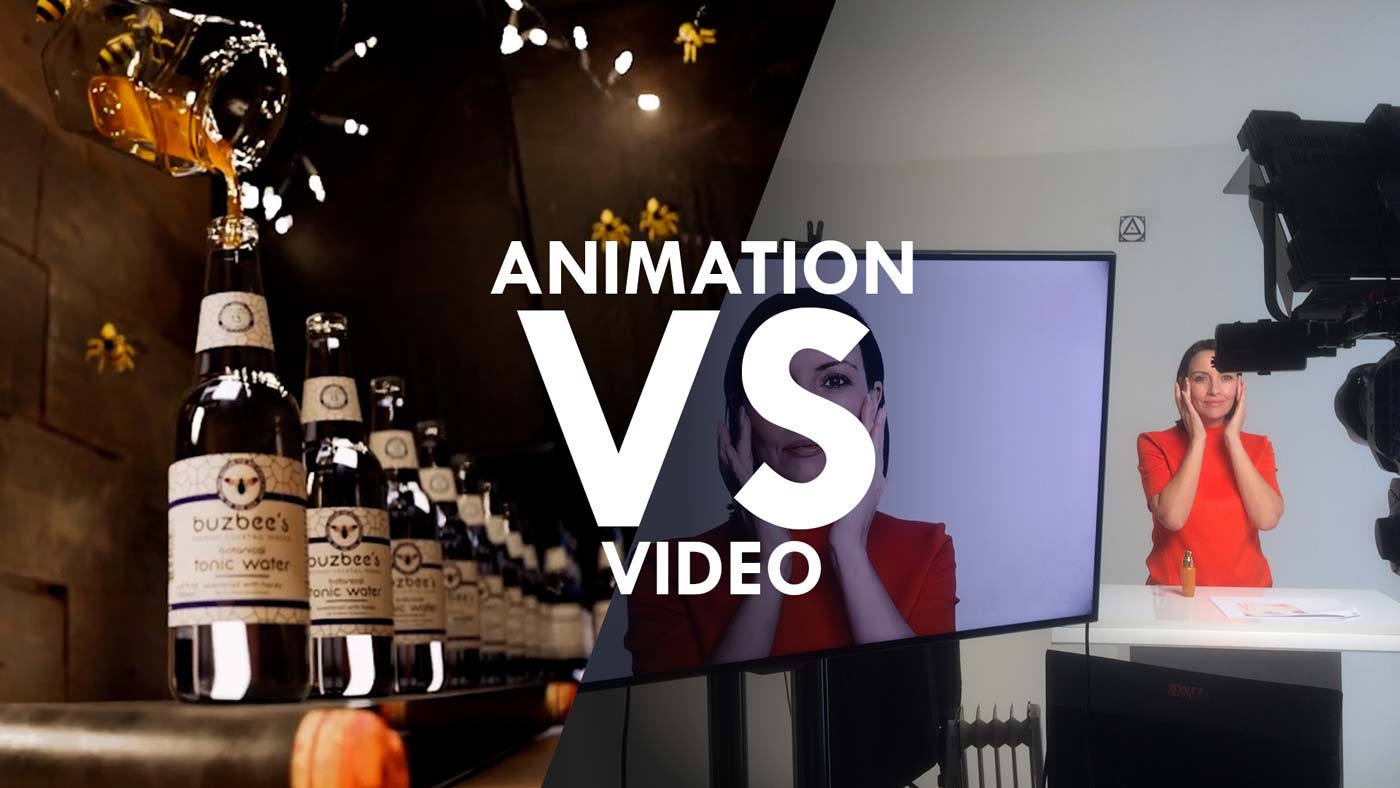
Video or Animation: who wins?
You have a product, value proposition and a plan to share your message far and wide… but do you share it with video or animation? Both have their own merits but is one better than the other?
Here's 5 considerations that might help you make up your mind
1 Budget
As you'd expect the devil is in the detail. There's a misconception that animation is cheaper than video, and it can be, but it depends heavily on the style of animation and how much complexity is involved (Pixar animations don't come cheap after all). The more detail in the models, movements, textures and length of animation can mean it takes a lot more time, people and computer power to produce. Having said that, simpler animations can be very cost effective and like for like come in around the same cost as video.
2 Audience Engagement

At a base level, video is a more personal. People like to see people, particularly for testimonial videos where seeing the person you're listening to has weight and encourages truest. A really well scripted and sympathetically designed animation can still achieve that (think about some of the Christmas adverts retail stores use) but it's likely to take a lot more time and cost.
3 Your product
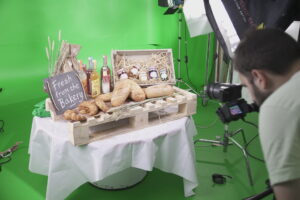
What you're selling can often lend itself to one medium over the other. Physical products, places, people often benefit from video so your audience can see the reality of what you're selling. Services and processes (intangibles) are hard to show in video so animation may be the winner here. That's not to say both can't still be effective for either situation though.
4 Speed
Video can be quicker. If it's not majorly reliant on special effects or large amounts of editing, video is the preferred option. Storyboards and pre-production are usually noticeably quicker and once you're shooting you've got content whereas animation often requires creating everything from scratch.
5 Future proof
3 months later and you want to repurpose your campaign? Depending on the change, it's generally a lot easier with animation. Changing a scene in animation means reopening the file and changing a segment of what's already there, whereas with video it may mean sourcing locations, actors and re-shooting a new scene.
Conclusion
The budget, message and product often influence the media you use, even what your competition are doing, but don't forget your audience. If you know where to advertise in front of them that might be your deciding vote too. But the ultimate decision is up to you.
Need help deciding which media works best for you? Talk to us about your next campaign
How much does video cost?
You know what we're going to say, don't you? How long is a piece of… videotape.
Well, videotape is long gone and so have some of the prohibitive cost of making videos. Kit is smaller, lighter and you can move quickly but as you can imagine, costs can still vary wildly depending on the project specifics and it's all about the detail.
The below costs are ballpark figures, actual projects can vary wildly in complexity and procedures.
Video testimonial costs
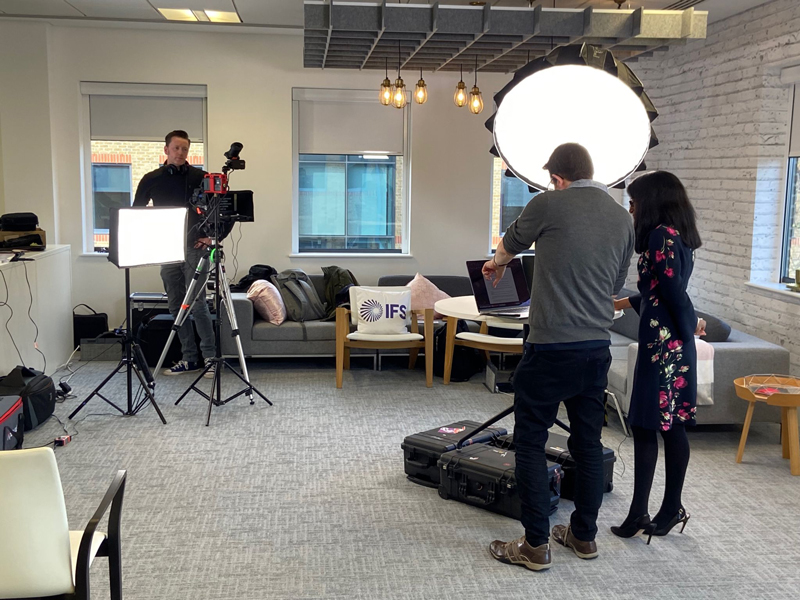 Ideally, you'd be looking at a 2 person team (director and a skilled lighting camera operator) and at least 2 cameras. Setup time will be around 2 hours, filming will probably take around 1 - 2 hours and acquiring some strong B-roll footage would likely take another couple of hours. You could expect to get a first draft around 3 working days later and with up to 2 rounds of amends your finished article could be available 7 working days later.
Cost: in the region of £4,000
The cost of Animation
With a bespoke animation, a lot of the cost is in the pre-production and design stages. You're aiming really to get the script and storyboard as close to the final thing before production starts so the animators are only making assets and movements once. With a good brief and responsive sign-off procedure, a script and storyboard could take a minimum of 3 working days. Depending on the complexity and if assets need creating or not, the first draft animation could take a further 5 days. Amends and voiceovers might take another 2 days and a final animation could be ready within 10 working days from start to finish.
Cost: in the region of £6,000
Corporate video cost
This can be a very open brief, but if we take the 2 routes a corporate video often takes we can put some guesswork in. The cheaper route might involve writing the script, storyboarding and arranging voiceovers, product demos and stock footage. From a good brief, this could take 10 working days and have a cost of around £5,000 (not including stock footage costs). The more creatively crafted and professional route might mean filming which means crew, travel. If we consider additional motion graphics, maybe some drone capture and a lot of creative editing.
This could easily take 20 working days and have a cost of around £15,000
Product launch or commercial
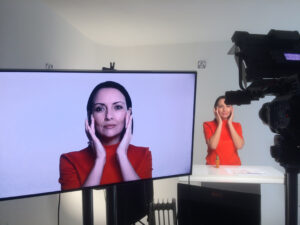
If you want to get really creative this is where it's at. It could involve a lot more project management, shooting footage in multiple locations, building sets, arranging actors and props, recording voice overs, applying visual effects all with some incredible attention to detail. The result will be unique, highly polished and have creative flair, but this takes time.
You could expect to take 30 working days and require a budget of around £35,000.
These are all finger-in-the-air costs and timescales, but we hope they at least give you some sort of idea of how affordable or expensive video can be in general.
Want to get in touch?
Buzbee's Premium Cocktail Mixers
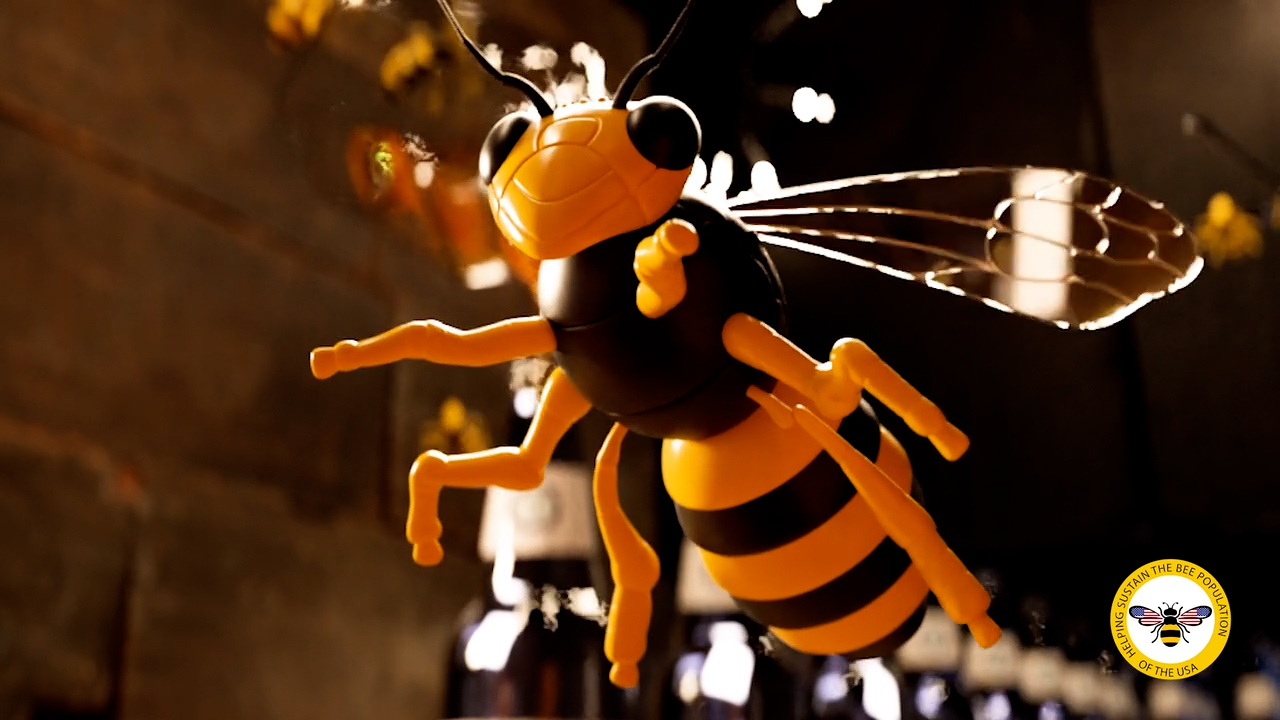
Premium Cocktail Mixer manufacturers Buzbee's are on a mission to deliver premium products that taste great, offer great value and to help Bee populations grow. Expanding into the US market, MD Andrew Wittich came to AR Media for a premium point-of-sale video in a really short turnaround. By bringing the heroes of the Buzbee's product to life, AR Media promoted all of the key benefits into a short and engaging video tailored directly to US vendors.
Created entirely from scratch in 3D, the Buzbee's advert features a team of 3D bees, excited about selling their product and highlighting their taste, low-calorie benefits plus what it can be mixed with. Watch the video below:
We worked with Buzbee's to deliver a concept, script, voiceovers and the finished 3D animation you see here and we're pleased to say the pitch worked! Buuzbee's Premium Cocktail Mixers are now available in multiple outlets across the USA
Find out more about Buzbee's Premium Tonics at: https://www.buzbeesbeverages.com/

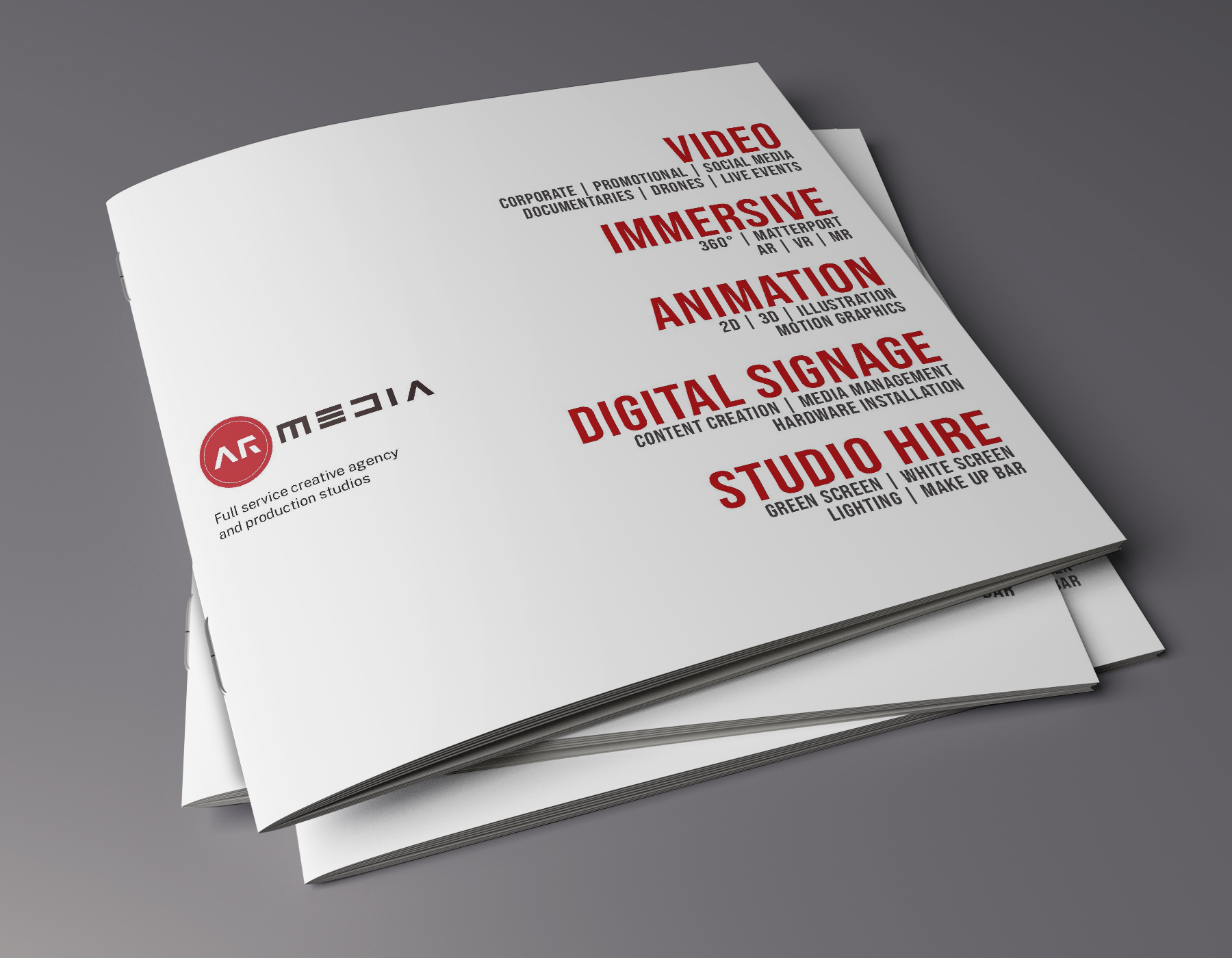
New AR Media brochure has landed!
It's that time of year... when we all think about spending time with family, Office parties, driving home for Christmas and the AR Media brochure... isn't it?
Ok, so not everyone is thinking of the AR Media brochure, but we did. We made a sparkly new one with QR codes and everything so if you prefer to see what we get up to instead of listening to the Queen's speech over the holidays you can have a look here.
 Find out about our services from video, animation, augmented and virtual realities to digital signage and studio hire. See some of the projects we've produced, effects we can achieve and how we can help you get your message out into the big wide world.
Find out how we help people far and wide bring their visions to life in in video, social media and on the big screen.
And if you don't, well Happy Christmas, Happy New Year, Season's Greetings and Happy Holidays to you anyway. Enjoy some time off and hopefully we'll talk in the new year.
Download the AR Media brochure
The AR team